Type E Plugs in France and Why Your Adapter Might Not Seat Properly
France uses Type E sockets with a protruding earth pin that blocks some Type C adapters. Here's what actually fits and works.
Your Adapter Slips Out and Won’t Stay Put
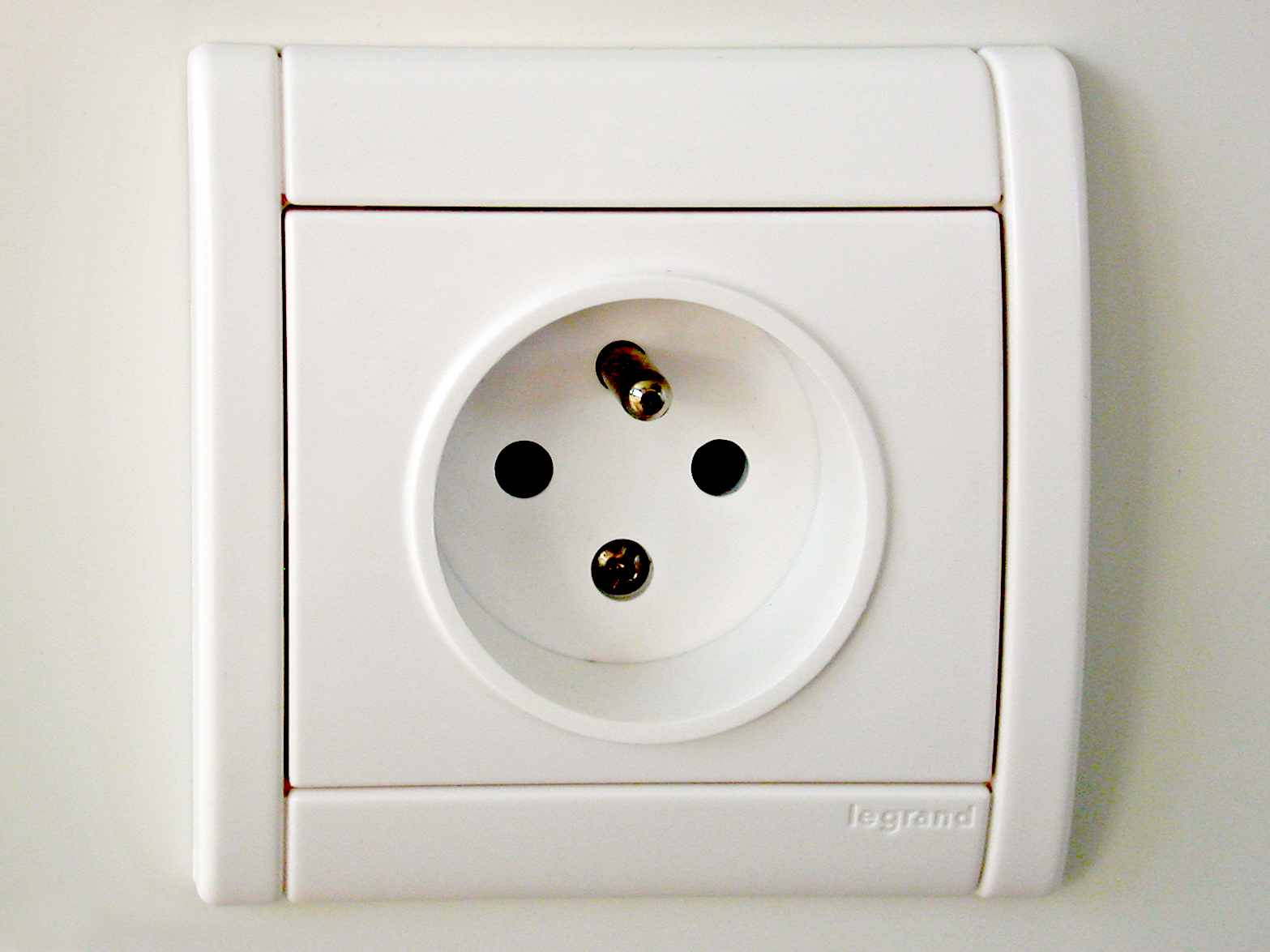
You push the prongs into the wall socket. They slide partway and stop. No amount of wiggling seats them flush. The socket has a metal rod sticking out of the centre, and your plug has no hole for it. That rod is the earth pin. It is the entire reason your plug does not work.
France uses the Type E socket standard, formally CEE 7/5. The wall receptacle has a protruding male earth pin. To connect, the plug must have a matching female recess or a hole that accepts that pin. Many travel plugs sold as "Europe-wide" lack this feature. They are built for the Type F Schuko socket, which uses spring clips on the sides of the socket instead of a central pin. When you force a Type F-only plug into a Type E socket, the earth pin hits the back of the plug, preventing full insertion. The plug sits loose, falls out, and carries no power.

The Shape That Makes Type E Different
Type E is a two-pin round plug with a maximum pin diameter of 4.8 mm and a pin length of 19 mm, spaced 19 mm apart. The socket includes a round earth hole 4.8 mm deep at its centre, with that spring-loaded earth pin protruding into the cavity. The pin is 14 mm long and 4.8 mm in diameter. It is not removable. You cannot clip it back. Every Type E socket in every French hotel, train station, and airport has one.
The plug that matches it perfectly is the Type E plug itself, which has a recessed cavity on its rear face that the earth pin enters. That plug is used across all countries listed with identical standards: Belgium, Poland, Czech Republic, Slovakia, Morocco, Senegal, Tunisia, and about 30 other territories including French overseas departments. If you are arriving from one of those places, your devices work without any adapter.
Check Your Plug Before You Leave
If you are arriving from a Type F country such as Germany, Austria, the Netherlands, or Spain, your plug may fit only if it is the hybrid CEE 7/7 standard. The CEE 7/7 plug has both the side spring clips for Type F sockets and the rear hole for the Type E earth pin. Most modern Schuko plugs sold in Germany are CEE 7/7. Check the back of your plug. If there is no hole, it will not seat in a French wall socket. You need a new plug adapter.
Type C Works, but Without Grounding
The Europlug, designated Type C (CEE 7/16), fits Type E sockets without issue. It has no earth connection at all, so the protruding earth pin simply passes through the gap between the two prongs. This works fine for low-power devices such as phone chargers, laptop power bricks marked 100-240V, and electric toothbrushes. You lose the safety ground, but the device will operate.
Do not rely on this for high-power appliances drawing more than 2.5 amps: hair dryers, kettles, or portable heaters. Without an earth connection, a fault condition could energise the metal casing. Use a proper Type E or CEE 7/7 adapter for those devices.
Voltage and Frequency: 230V at 50 Hz
France runs on 230 volts at 50 hertz, with a tolerance of plus or minus 10 percent, so you might see anywhere from 207V to 253V at the socket. Check every device label before plugging it in. Dual-voltage devices marked "100-240V, 50/60 Hz" are safe everywhere. Single-voltage devices marked only "120V" or "100-127V" will be destroyed if plugged into a French socket without a step-down voltage converter. That includes many North American hair tools, small kitchen appliances, and older electronics.
If you must bring a single-voltage device, buy a converter that handles at least the wattage of your appliance. A 120V hair dryer rated at 1500W requires a converter rated for 2000W or higher. Converters are heavy and fail often. The practical solution is to buy a dual-voltage travel hair dryer or leave the single-voltage appliance at home.
USB Charging in French Hotels
USB charging is simpler. Most 3-star and above hotels now include USB-A ports in bedside outlets or desk lamps, delivering 5V at 1 to 2.4 amps. USB-C ports appear in 4-star and above properties and newer renovations, with power delivery up to 60W in premium hotels. Budget and independent hotels rarely have USB. Carry your own USB charger with a Type E plug to be safe.
- Socket Standard: Type E (CEE 7/5)
- Earth Connection: Protruding male pin in the wall socket
- Voltage: 230 V (tolerance 207, 253 V)
- Frequency: 50 Hz
- Adapter Required For: Type A, B, G, D, H, I, J, K, L, M, N
- Adapter Not Required For: Type E, Type F (if CEE 7/7), Type C (ungrounded)
- Converter Required For: Single-voltage 100, 127 V devices only
| Plug Type | Fits? | Grounding | Common Origin |
|---|---|---|---|
| Type E (CEE 7/5) | Yes | Full earth | Belgium, Poland, Morocco, Senegal, French overseas territories |
| Type F (CEE 7/3) without rear hole | No | N/A | Germany, Austria, Netherlands, Spain (older plugs) |
| Type F (CEE 7/7 hybrid) | Yes | Full earth | Germany, Austria, Netherlands, Spain (modern plugs) |
| Type C (CEE 7/16 Europlug) | Yes | None (ungrounded) | Most of Europe, Asia, Africa, South America |
| Type A / B (NEMA 1-15 / 5-15) | No | N/A | North America, Japan |

What to Carry and Where to Buy it
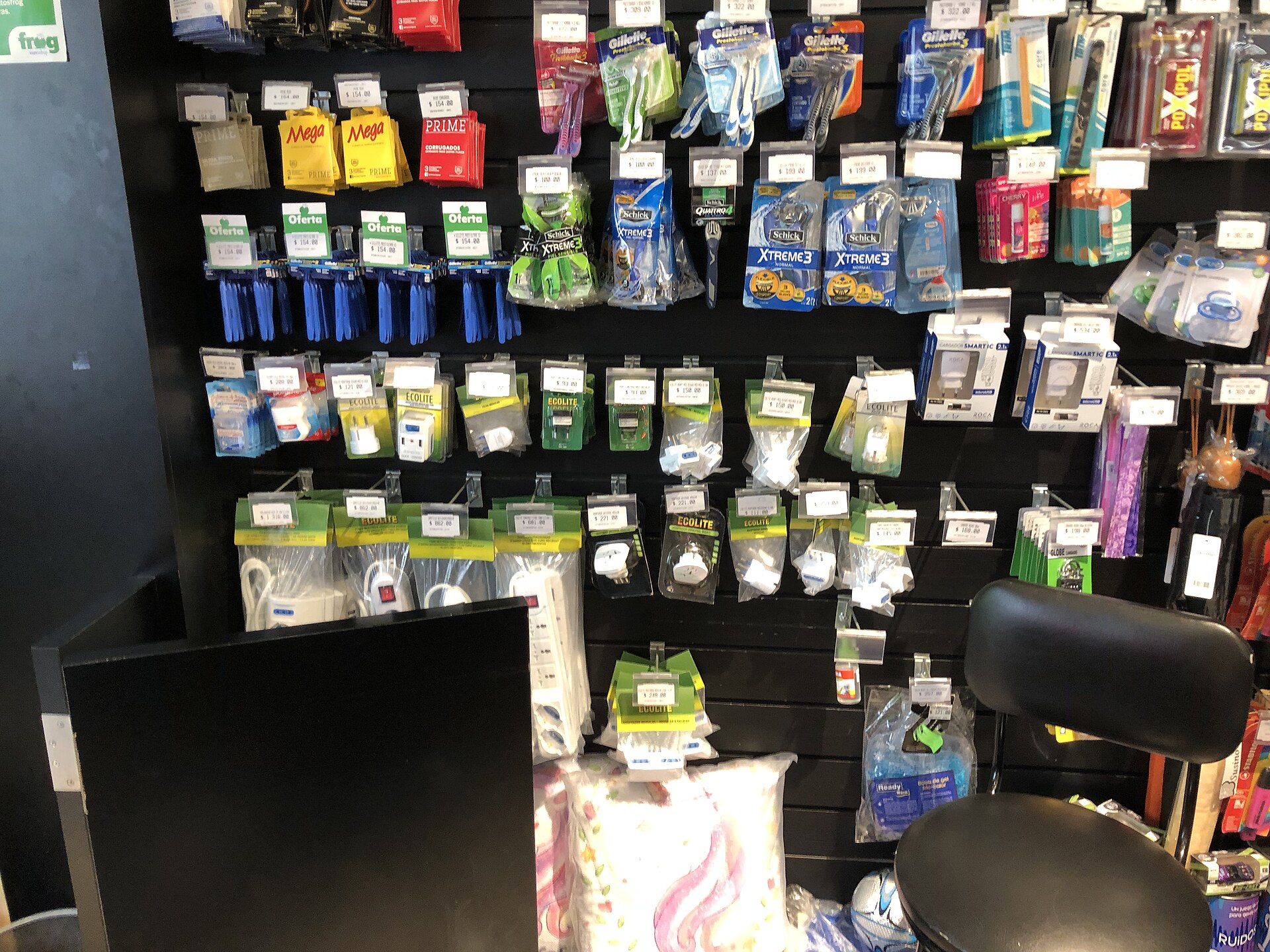
Buy a Type E plug adapter before you leave. Do not wait to pick one up at a French airport convenience store, where they cost more and stock limited options. A universal travel adapter that includes the Type E earth-pin hole is the best choice: it covers France and most of continental Europe, plus the UK, Australia, and North America with interchangeable prongs. Confirm on the product listing that the "Europe" setting explicitly supports the French earth pin, not just Schuko.
If you already own a universal adapter that fits German sockets but wiggles in France, the missing part is that central hole. Some units sold as "Europe" are Type F only. Return it and buy one rated as "Type E/F" or "CEE 7/7 compatible."
Read the Label Before You Pack
For North American travellers: your electronics (phone, laptop, camera charger) are almost certainly dual-voltage. Check the brick. If it says 100-240V, you need only a plug adapter, not a converter. Your hair dryer, curling iron, and electric razor are the usual offenders. Read the label. If it says 120V only, leave it home.
- Check the back of every plug for a hole that accepts a 4.8 mm pin.
- Buy a CEE 7/7 hybrid adapter if you travel between France and Schuko countries.
- Carry a USB-C charger with a Type E plug for faster phone and laptop charging.
- Label your adapter with tape or a marker. French hotel rooms are dim, and adapters look identical on the desk.
Common Questions
Why does my European adapter not fit in French sockets?
The French Type E socket has a protruding earth pin in the centre. Many adapters made for Germany or Spain use the Type F Schuko standard, which lacks the matching hole for that pin. Without the hole, the plug cannot sit flush.
Can I use a German Schuko plug in France?
Only if the plug is the hybrid CEE 7/7 type, which has a rear hole for the earth pin. Older or cheap Schuko plugs without that hole will not seat properly and will fall out.
Do I need a voltage converter for my phone charger in France?
No. Nearly all phone chargers, laptop power bricks, and camera chargers are dual-voltage and marked 100-240V. You only need a plug adapter for the physical shape.
What happens if I plug a 120V hair dryer into a 230V socket without a converter?
It will be destroyed immediately. The internal components will overheat, blow a fuse, or catch fire. Single-voltage 120V devices require a step-down converter rated for the device wattage.
Can I charge my laptop with USB-C in French hotels?
In 4-star and above hotels, increasingly yes. USB-C ports in bedside lamps or desks are becoming standard, with power delivery up to 60W. Budget hotels rarely have them. Bring your own charger.
Are public USB charging stations common in France?
No. Public USB ports are rare outside airports and some newer train stations. Free Wi-Fi often requires a French mobile number for SMS verification. Carry a power bank and your own adapter.
Which countries use the same plug as France?
Belgium, Poland, Czech Republic, Slovakia, Morocco, Senegal, Tunisia, and about 30 other countries and territories including French overseas departments. No adapter needed for Type E plugs.
Read next
-
 France eSIM Guide for Travellers Who Need Data Across the EU
A French eSIM with EU roaming covers France and neighbouring countries without airport markup. Here's how to buy one that actually works.
France eSIM Guide for Travellers Who Need Data Across the EU
A French eSIM with EU roaming covers France and neighbouring countries without airport markup. Here's how to buy one that actually works.
-
 Which Paris Airport to Choose and When to Fly Into a French Region Instead
How to decide between Paris CDG, Orly, or a regional French airport based on your itinerary, train connections, and total door-to-door time.
Which Paris Airport to Choose and When to Fly Into a French Region Instead
How to decide between Paris CDG, Orly, or a regional French airport based on your itinerary, train connections, and total door-to-door time.
-
 Best Time to Visit France and Why August Is the Real Trap
August looks perfect on paper but France's domestic holiday exodus closes city shops and overloads the coast. Here's when to go instead.
Best Time to Visit France and Why August Is the Real Trap
August looks perfect on paper but France's domestic holiday exodus closes city shops and overloads the coast. Here's when to go instead.
-
 SNCF Train Booking and What a French Strike Actually Does to Your Trip
French train travel means navigating TGV and TER bookings, validating paper tickets, and surviving strikes. Here's the full system.
SNCF Train Booking and What a French Strike Actually Does to Your Trip
French train travel means navigating TGV and TER bookings, validating paper tickets, and surviving strikes. Here's the full system.
-
 Tipping in France and Why Most Online Advice Gets It Wrong
Service is included on French restaurant bills, and most tipping advice online is wrong. Here's what locals actually expect, plus card rules.
Tipping in France and Why Most Online Advice Gets It Wrong
Service is included on French restaurant bills, and most tipping advice online is wrong. Here's what locals actually expect, plus card rules.
-
 France Safety Guide Where Pickpocketing Is the Real and Concentrated Risk
Violent crime against tourists in France is rare, but pickpocketing is concentrated on the CDG RER B, Louvre queues, and Gare du Nord.
France Safety Guide Where Pickpocketing Is the Real and Concentrated Risk
Violent crime against tourists in France is rare, but pickpocketing is concentrated on the CDG RER B, Louvre queues, and Gare du Nord.