Pickpocketing in France Is Real and It Happens in Known Places
Violent crime against tourists in France is rare, but pickpocketing is concentrated on the CDG RER B, Louvre queues, and Gare du Nord.
Pickpocketing in France is Real and it Happens in Known Places
A woman in line for the Eiffel Tower looks down for half a second. A man has fumbled a map into her face. His accomplice lifts her wallet from an open jacket pocket. That is the standard script. Pickpocketing in France concentrates in a small set of predictable locations, and the methods are repetitive enough that you can learn them in five minutes. Violent crime against tourists is rare. The homicide rate sits at 1.6 per 100,000 people. Opportunistic theft is the real risk, and it follows a geography you can map.
This page tells you exactly where theft clusters, how the distraction works, and what countermeasures stop it. You do not need to fear walking through France. You need to guard your belongings inside a handful of transit corridors and monument queues.

The Exact Map of Where Theft Clusters
Pickpocketing in France is not a random crime. It concentrates in six places. Learn them and you defuse 90 percent of the risk.
RER B From Charles de Gaulle Airport
The ride from CDG to central Paris on the RER B is the single highest risk segment for arriving tourists. You are carrying luggage, jet lagged, and watching signs instead of your bags. Put bags overhead or between your feet with a strap around your leg. Keep your phone in a zipped pocket, not a back pocket. The train is crowded at Gare du Nord where most travellers transfer.
Monument Queues
The Eiffel Tower lift queue, the Louvre main entrance line, the Mona Lisa room, the Sacré Cœur steps and funicular, and the area around Notre Dame are all high density pickpocket zones. The tactic is consistent: a team of two or three people creates a distraction while one works your bag or pocket. The Eiffel Tower queues and lifts are the peak location. Book your Eiffel Tower slot online 60 days ahead. A booked time slot cuts your queue time and your exposure.
Metro Lines 1, 4 and 6
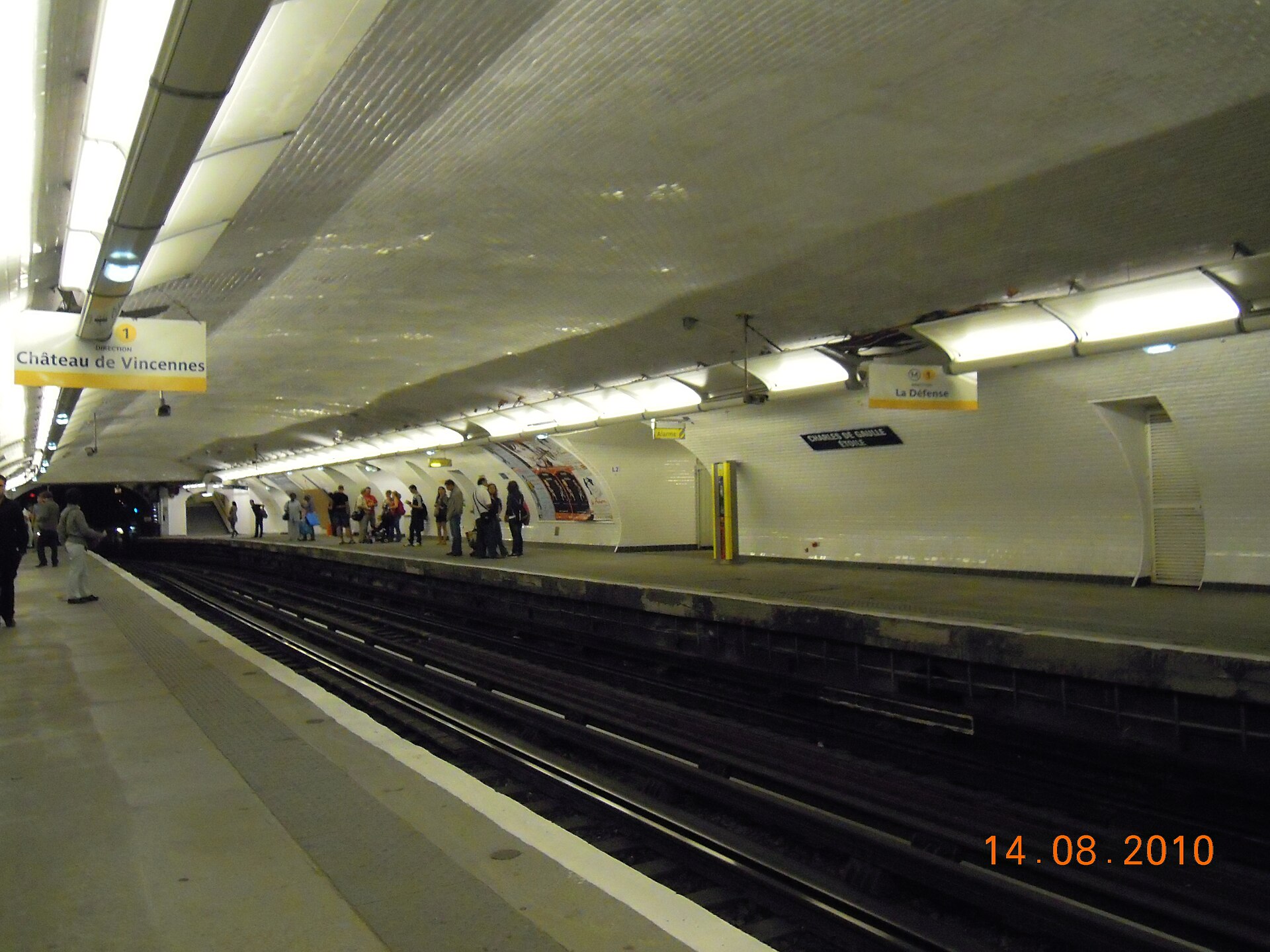
Line 1 runs from Champs Élysées to the Louvre. Line 4 connects Gare du Nord to Châtelet. Line 6 runs Bir Hakeim to Trocadéro, the segment serving the Eiffel Tower. These three lines carry the highest tourist density. The technique is the crowd surge: a team blocks the metro doors just as they close, creating a crush, and lifts a phone or wallet in the chaos. Stand with your back to a wall or pole. Keep your bag zipped and in front of you.
Major Train Stations
Gare du Nord, Gare de l'Est, Gare de Lyon, and the Châtelet Les Halles RER hub are the four danger zones. These stations combine high foot traffic, tired travellers with luggage, and pinch points at ticket machines and platform gates. Validate your train ticket in the yellow compostage machine before boarding. A distracted traveller fumbling with a ticket is a target.
The Four Distraction Methods You Will See
The methods are not creative. They are the same four scripts used across Europe. Learn them and you will spot them before they reach you.
- Crowd surge at metro doors: A team blocks the closing doors, creating a tight scrum. One member lifts a phone from an outside pocket while you brace for the push.
- Spill tactic: Someone spills a drink or squirts a substance on your shirt or bag. They apologise and offer to clean it. While you look down, an accomplice reaches your pocket.
- Map or clipboard in the face: A person thrusts a map, clipboard, or sign into your line of sight, asking a question. You look at the object. The accomplice opens your bag.
- Fake altercation: Two people stage a loud argument or brief physical fight near you. Everyone looks. Your bag is not being watched.
Every one of these methods relies on your attention being pulled away from your belongings for three to five seconds. The fix is simple. Keep your bag zipped and in front. Keep your phone in a zipped or front pocket. Treat any sudden close contact as a theft attempt until proven otherwise.
| Location | Risk Level | What To Do |
|---|---|---|
| RER B from CDG to Paris | High | Strap bag around leg. Phone in zipped pocket. Watch transfer at Gare du Nord. |
| Eiffel Tower lift queue | High | Book timed slot 60 days ahead. Keep bag zipped and front facing. |
| Louvre main entrance and Mona Lisa room | High | Book mandatory time slot. Carry only a cross body bag. No back pockets. |
| Metro Line 1, 4, 6 during peak hours | High | Stand with back to wall or pole. Bag in front. No phone in hand near doors. |
| Gare du Nord, Gare de l'Est, Gare de Lyon | High | Validate ticket before reaching platform. Keep luggage between feet. |
| Sacré Cœur steps and funicular | Medium | Watch for bracelet scam. Do not pause on the steps. |
| Notre Dame vicinity | Medium | Zipped bag. Ignore clipboard signers. |

Scams That Precede Theft and How to End Them Immediately
Three common scams in France are not theft themselves but set up a theft or a direct cash demand. Know them and you shut them down instantly.
The Petition Scam
A person with a clipboard asks you to sign for a fake charity, often a deaf or disability association. After you sign, they demand a cash donation. Do not sign. Do not make eye contact. Keep walking.
The Friendship Bracelet Scam
A person approaches and ties a string around your wrist without consent, then tightens it so you cannot remove it. They demand payment to cut it off. Pull your hand away before the string goes on. If it is already on, walk to a shop or metro employee. Do not pay.
The Found Ring Scam
A person picks up a ring near you and asks if you dropped it. When you say no, they claim it is valuable and demand a reward for not keeping it. Walk away. The ring is worthless.
All three scams happen at Sacré Cœur, around the Eiffel Tower, and on the steps of Montmartre. The single effective response: keep moving and say non merci without slowing down.
Common Questions
Is violent crime against tourists common in France?
No. The homicide rate is 1.6 per 100,000 people, lower than many other European countries. Violent crime against tourists is rare. The real risk is opportunistic pickpocketing in crowded tourist zones.
What is the single most dangerous metro line for pickpocketing?
Metro Line 1, which runs from Champs Élysées through the Louvre corridor. Line 4 from Gare du Nord to Châtelet and Line 6 from Bir Hakeim to Trocadéro are also high risk. These three lines serve the densest tourist traffic.
How do I avoid theft on the RER B from the airport?
Keep your bag between your feet with the strap around your leg. Do not put your phone in a back pocket. Stay alert during the transfer at Gare du Nord.
What should I do if someone spills liquid on me?
Do not look down. Do not let them clean your bag. Keep your hand on your pocket or bag and walk away. The spill is a distraction while an accomplice reaches for your belongings.
Are pickpockets active outside Paris?
Yes, but at lower density. Train stations in Lyon, Marseille, Bordeaux, and Nice see some activity. The same methods apply. The concentration is highest in Paris because that is where the tourists are.
What is the emergency number in France?
The pan European number is 112. Police is 17. Ambulance is 15. Fire brigade is 18. The SMS number for deaf or hearing impaired people is 114.
Can I keep my phone in my hand while walking?
Not near metro doors, monument queues, or crowded stations. Keep it in a zipped front pocket or a zipped interior bag pocket. A phone in the hand is the most common item stolen in the crowd surge at metro doors.
Read next
-
 France eSIM Guide for Travellers Who Need Data Across the EU
A French eSIM with EU roaming covers France and neighbouring countries without airport markup. Here's how to buy one that actually works.
France eSIM Guide for Travellers Who Need Data Across the EU
A French eSIM with EU roaming covers France and neighbouring countries without airport markup. Here's how to buy one that actually works.
-
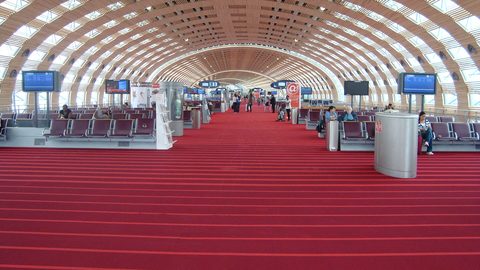 Which Paris Airport to Choose and When to Fly Into a French Region Instead
How to decide between Paris CDG, Orly, or a regional French airport based on your itinerary, train connections, and total door-to-door time.
Which Paris Airport to Choose and When to Fly Into a French Region Instead
How to decide between Paris CDG, Orly, or a regional French airport based on your itinerary, train connections, and total door-to-door time.
-
 Best Time to Visit France and Why August Is the Real Trap
August looks perfect on paper but France's domestic holiday exodus closes city shops and overloads the coast. Here's when to go instead.
Best Time to Visit France and Why August Is the Real Trap
August looks perfect on paper but France's domestic holiday exodus closes city shops and overloads the coast. Here's when to go instead.
-
 SNCF Train Booking and What a French Strike Actually Does to Your Trip
French train travel means navigating TGV and TER bookings, validating paper tickets, and surviving strikes. Here's the full system.
SNCF Train Booking and What a French Strike Actually Does to Your Trip
French train travel means navigating TGV and TER bookings, validating paper tickets, and surviving strikes. Here's the full system.
-
 Tipping in France and Why Most Online Advice Gets It Wrong
Service is included on French restaurant bills, and most tipping advice online is wrong. Here's what locals actually expect, plus card rules.
Tipping in France and Why Most Online Advice Gets It Wrong
Service is included on French restaurant bills, and most tipping advice online is wrong. Here's what locals actually expect, plus card rules.
-
 What a Day in France Costs and the Lunch Menu Trick That Halves It
A realistic daily budget for France, plus the fixed-price lunch menu strategy that cuts food costs in half while letting you eat better.
What a Day in France Costs and the Lunch Menu Trick That Halves It
A realistic daily budget for France, plus the fixed-price lunch menu strategy that cuts food costs in half while letting you eat better.