August in France Is a Domestic Exodus, Not a Weather Problem
August looks perfect on paper but France's domestic holiday exodus closes city shops and overloads the coast. Here's when to go instead.
August in France is a Domestic Exodus, Not a Weather Problem
You arrive in Paris on the first Monday of August. The sun is out, the sky is clear, the temperature sits at a comfortable 23 °C. You walk to a bistro you saved on your map. The shutters are pulled down. A handwritten sign says "Fermeture annuelle, retour le 1er septembre." The next three restaurants on your list are the same. August in France has the best weather of the year and the fewest open businesses.
The question of the best time to visit France is not about meteorology. It is about domestic French behaviour. In August, the entire country relocates. Up to 40 percent of the Paris population leaves. Coastal towns swell to two to five times their normal population. Independent shops in Paris close for two to four weeks. Restaurants do the same. The warm weather and long daylight hours are real, but the experience you paid for is not available.
France sits between 42.3°N and 51.1°N, giving it four distinct climate zones. The Mediterranean coast runs 18 to 30 °C in summer and is driest in July and August. The Atlantic coast runs 15 to 25 °C. The north runs 13 to 23 °C. The Alps valleys run 10 to 25 °C. Every zone has good weather in late summer. Every zone also has the same problem.

.jpg)
Why August Traps You Twice: Closures and Crowds
Urban Closures
The first trap is urban closures. Paris empties most in weeks 31 through 34, roughly late July to late August. The city is quieter, which sounds like a benefit, but quiet comes from closed shops, closed restaurants, and reduced transit frequency. A restaurant kitchen closes firmly between 14:00 and 19:00 every day of the year. In August, the restaurant itself is gone. Your dinner options narrow to tourist-geared brasseries charging premium prices for average food.
Coastal Overcrowding
The second trap is coastal overcrowding. The August coastal population surge factor is two to five times normal. The Atlantic coast water temperature is 19 to 22 °C. The Mediterranean coast is 22 to 26 °C. Both are pleasant. Both are also packed with French families on their eight-week school holiday that runs early July to early September. You queue for parking at the Dune du Pilat. You queue for the Mont-Saint-Michel shuttle bus. You queue for a table in Saint-Malo's Intra-Muros.
Price Spikes
The third trap is price spikes. The Mediterranean coast peak price period covers July and August. The Atlantic coast peak price period covers the same window. Hotels in Nice, Cannes, and Saint-Tropez charge double the shoulder-season rate. Rental car availability drops and prices rise. The Paris trade fair calendar adds another hidden cost: Maison&Objet in January and late summer spikes hotel rates in the capital even outside peak tourist season.
The Real Best Time: Shoulder Season France
Visit France in the shoulder season. For the north and Atlantic coast, that is April through June and September through October. For the Mediterranean coast, it is April through June and September through October. For the Alps in summer, go in June or early autumn. For the Alps in winter, aim for early December and late March through April, excluding Easter.
April to June
April brings the French spring school holiday, two weeks staggered by zone (A, B, C), so domestic travel is spread out. Temperatures on the Mediterranean coast range from 18 to 30 °C, but the real heat has not arrived. The Atlantic coast is 15 to 25 °C. The north is 13 to 23 °C. The wettest months for the north are October through January, not spring. You get long daylight, open restaurants, and prices that have not yet peaked.
September to October
Early autumn is the single best window for most of France. The French school year has restarted. The eight-week summer holiday is over. The Mediterranean coast is still warm, 22 to 26 °C water temperature, but the crowds are gone. The Atlantic coast water is 19 to 22 °C. The north is mild. The Alps valleys are 10 to 25 °C. Independent shops and restaurants in Paris are back open after their August closures. Book the Eiffel Tower 60 days ahead without fighting for a slot. Book a timed entry at the Louvre. Order bouillabaisse in Marseille without a day's notice.
What You Lose and What You Gain
You lose the guarantee of hot weather. The Mediterranean coast might be 18 °C instead of 30 °C. You gain the ability to experience the places you came for. The Palais des Papes in Avignon has no furniture inside, so you do not need a full day, but you want to walk the medieval grid of the Centre Ancien without shoulder-to-shoulder crowds. The Cité de Carcassonne outer access is free, but the interior is best seen when you can move freely. Kayak the Gorges du Verdon when the water is not packed with rental groups.
| Month | Zone | Temperature Range | Crowd Level | Key Risk |
|---|---|---|---|---|
| April | North/Atlantic | 8–16 °C | Low | Spring school holiday zones stagger crowds |
| May | North/Atlantic | 11–19 °C | Low | Wettest period is over, reliable weather |
| June | All | 13–28 °C | Moderate | Peak season begins, book everything |
| July | All | 15–30 °C | High | Bastille Day on 14th, Tour de France |
| August | All | 18–30 °C | Very High | Urban closures, coastal surge, peak prices |
| September | All | 13–26 °C | Low | Best balance: open businesses, warm weather |
| October | North/Atlantic | 7–17 °C | Low | Wettest months begin, fewer daylight hours |
How August Fails the Practical Traveller
August fails you in specific, measurable ways. Arrive at Charles de Gaulle and take the RER B to central Paris, 35 to 50 minutes for about €11.80. Your hotel is open. The bakery around the corner is closed. The cheese shop is closed. The wine bar is closed. Walk to Le Marais, expecting aristocratic mansions and galleries. The galleries are closed. The Montmartre village is tourist-heavy but the locals have left. The restaurant that serves galette complète in Brittany is on holiday.
The failure case is simple: you are in France, it is 14:00, the kitchen is closed until 19:00, and your only option is a cold supermarket sandwich. You cannot buy a train ticket at a rural station because there is no staffed counter. You cannot validate your paper ticket because you did not find the yellow compostage machine, and you get a fine. You cannot use your contactless card at an automated fuel pump because it is not chip-and-PIN. You cannot find a public toilet without coins. These frictions exist year-round. In August, they multiply because the people who normally help you are on holiday.
The single thing that most often goes wrong here is believing that warm weather equals a good trip. It does not. Warm weather plus open businesses plus manageable crowds equals a good trip. That combination exists in late summer and early autumn, not in the peak holiday month.
Common Questions
Is August really that bad in Paris?
Yes, for independent businesses. Up to 40 percent of the population leaves, and shops and restaurants close for two to four weeks. The major landmarks stay open, but the local experience you came for is gutted.
What about the French Riviera in August?
The Mediterranean coast is 22 to 26 °C water temperature and 18 to 30 °C air temperature. The problem is the coastal population surge of two to five times normal. Beaches are packed, parking is scarce, and prices are at their annual peak.
When should I visit the Alps?
For summer hiking, go in June or early autumn to avoid crowds. For skiing, aim for early December and late March through April (excluding Easter) to avoid the peak price periods of Christmas, New Year, and February school holidays. The ski season runs mid-December to late April above 2000 metres.
What is the cheapest month to visit France?
Paris is emptiest in August, but that does not mean cheap. The secondary low-crowd period is mid-January to mid-February, when flight and hotel rates drop. The north and Atlantic coast shoulder season runs April to June and September to October, offering lower prices than peak summer.
Can I avoid the crowds at major landmarks in August?
Book the Eiffel Tower 60 days ahead online. Book a timed slot at the Louvre. Book timed entry at Versailles. You can still visit, but you need advance planning. The alternative is to visit in early autumn when bookings are easier.
Read next
-
 France eSIM Guide for Travellers Who Need Data Across the EU
A French eSIM with EU roaming covers France and neighbouring countries without airport markup. Here's how to buy one that actually works.
France eSIM Guide for Travellers Who Need Data Across the EU
A French eSIM with EU roaming covers France and neighbouring countries without airport markup. Here's how to buy one that actually works.
-
 Which Paris Airport to Choose and When to Fly Into a French Region Instead
How to decide between Paris CDG, Orly, or a regional French airport based on your itinerary, train connections, and total door-to-door time.
Which Paris Airport to Choose and When to Fly Into a French Region Instead
How to decide between Paris CDG, Orly, or a regional French airport based on your itinerary, train connections, and total door-to-door time.
-
 SNCF Train Booking and What a French Strike Actually Does to Your Trip
French train travel means navigating TGV and TER bookings, validating paper tickets, and surviving strikes. Here's the full system.
SNCF Train Booking and What a French Strike Actually Does to Your Trip
French train travel means navigating TGV and TER bookings, validating paper tickets, and surviving strikes. Here's the full system.
-
 Tipping in France and Why Most Online Advice Gets It Wrong
Service is included on French restaurant bills, and most tipping advice online is wrong. Here's what locals actually expect, plus card rules.
Tipping in France and Why Most Online Advice Gets It Wrong
Service is included on French restaurant bills, and most tipping advice online is wrong. Here's what locals actually expect, plus card rules.
-
 France Safety Guide Where Pickpocketing Is the Real and Concentrated Risk
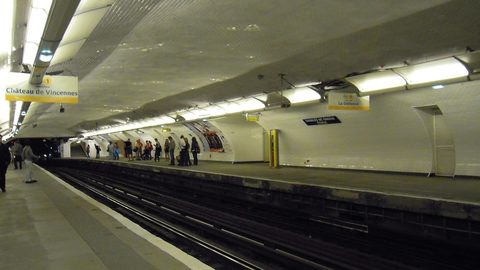
Violent crime against tourists in France is rare, but pickpocketing is concentrated on the CDG RER B, Louvre queues, and Gare du Nord.
France Safety Guide Where Pickpocketing Is the Real and Concentrated Risk
Violent crime against tourists in France is rare, but pickpocketing is concentrated on the CDG RER B, Louvre queues, and Gare du Nord.
-
 What a Day in France Costs and the Lunch Menu Trick That Halves It
A realistic daily budget for France, plus the fixed-price lunch menu strategy that cuts food costs in half while letting you eat better.
What a Day in France Costs and the Lunch Menu Trick That Halves It
A realistic daily budget for France, plus the fixed-price lunch menu strategy that cuts food costs in half while letting you eat better.