The Order to Do Things for a First Schengen Trip
Planning a first multi-country Schengen trip starts with picking one region and three bases, not a dozen cities. Here is the order to plan in.
The Order to Do Things for a First Schengen Trip
A first multi-country Schengen trip paralyses you with choices across 27 nations, multiple currencies, and languages. You solve it by picking one anchor region. Limit yourself to three bases in 14 days. Build around a rail line rather than a wish list, and accept that you will miss more than you see.
The honest version is that travel is smooth until you hit a random police check, a sudden rail strike in a nation where you do not speak the language, or the quiet Sunday when everything is closed. Juggling multiple currencies (euro, zloty, koruna, forint), languages, and cultural norms is harder than the logistics of crossing the borders themselves. You need a ruthless curation framework.
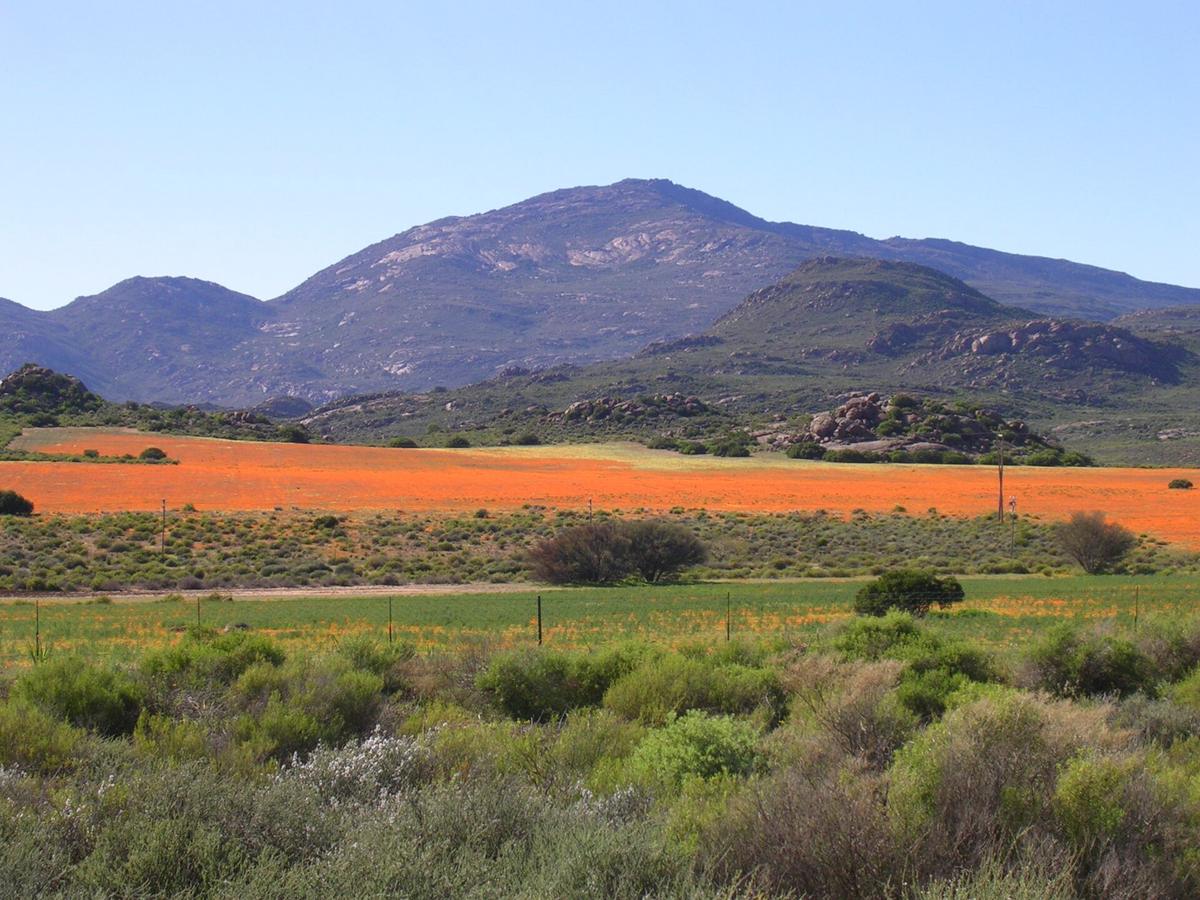
Pick Your Anchor Region First
Do not start with a list of nations. Start with one of the nine districts below. Each works as a self-contained 14-day arc where you move by train, not flight. Your anchor region determines your flight hub, your rail pass, and your language challenges.
Alpine Order and Lake Swims
Anchor in Bavaria (Germany) or the Dolomites (Italy).
Coast and Wine
Anchor in the Algarve (Portugal) or Provence (France).
Spired Cities and Sandstone Rock Towns
Anchor in Bohemia (Czechia).
Limestone Old Towns and Adriatic Beaches
Anchor on the Dalmatian Coast (Croatia).
Midnight Sun and Reindeer
Anchor in Lapland (Finland or Sweden).
Cypress Hills and Agriturismo
Anchor in Tuscany (Italy).
Germanic-French Hybrid
Anchor in Alsace (France).
Name your anchor region before you open a flight search. That one decision eliminates 90 percent of the paralysis.
Limit to Three Bases in 14 Days
The minimum for a multi-country trip is 14 days. Anything less forces you into a logistical sprint between two or three cities, missing the point of the borderless flow entirely. With 14 days, you hold three base cities, each for 4 to 5 nights, with day trips radiating outward.
A base is a city with a rail hub station. From Paris Gare du Nord you reach Brussels in 1 hour 22 minutes. From Munich Hbf you reach Salzburg in 1 hour 30 minutes. From Vienna Hbf you reach Bratislava in 1 hour by Railjet train or 1 hour by Twin City Liner boat. From Milan Centrale you reach Lake Como in 40 minutes. From Madrid Atocha you reach Toledo in half an hour by AVE high-speed train. From Lisbon you reach Sintra in 40 minutes by suburban train from Rossio station. From Nice you reach Monaco in 25 minutes by TER regional train along the coast.
Each base gives you 4 to 5 full days to explore the city itself plus 2 to 3 day trips. You unpack once. You learn the local supermarket, the metro entrance, the pharmacy hours. That is the opposite of burnout.
Do not attempt Paris, Rome, Berlin, and Amsterdam in 10 days. That is the single common mistake. Treating Schengen as one nation and cramming four capitals into a sprint means you spend more time in airport security lines and train stations than experiencing any of them. You come home exhausted and remembering only train platforms.
Build Around a Rail Line, Not a Wish List
Once you have your three bases, connect them with a single high-speed rail line. You are not collecting nations. You are tracing a corridor. The corridor dictates your schedule, not a ranked list of landmarks.
Choose a corridor that matches your anchor region. For Bavaria and Bohemia, the Berlin, Munich line then Munich, Prague. For Tuscany and the Dolomites, the Milan, Rome line then Milan, Bolzano. For Alsace and Provence, the Paris, Strasbourg line then Paris, Marseille. For the Dalmatian Coast, the Zagreb, Split line then Split, Dubrovnik ferry. For the Algarve, the Lisbon, Faro line.
Why Rail Beats Flying
High-speed rail operators including TGV, ICE, Frecciarossa, AVE, Railjet, and Eurostar run at 300 to 320 km/h on most lines. Milan to Rome takes 2 hours 55 minutes. Madrid to Barcelona takes 2 hours 30 minutes. Vienna to Budapest takes 2 hours 40 minutes. Zurich to Milan takes 3 hours 15 minutes. You arrive in the centre of the next city, not an airport 40 minutes outside it.
Buy From the Right Operator
Purchase tickets from the correct national operator. A French train bought on a German site can be unrefundable and impossible to change. That is a common friction point. Use the official operator for the route.
When You Must Fly
Budget airlines including Ryanair, easyJet, Wizz Air, Vueling, and Eurowings offer base fares from EUR 10 to 80 one way. Paris to Barcelona flies in 1 hour 45 minutes. Berlin to Vienna flies in 1 hour 20 minutes. Amsterdam to Milan flies in 1 hour 40 minutes. But factor in 2 hours at the airport before a Schengen flight and the EUR 10 to 60 baggage fee. A 3-hour-40-minute Paris to Frankfurt train ride often beats the door-to-door time of a flight.
Book the Landmarks That Sell Out Before You Book Flights
Some landmarks have timed entry tickets that sell out weeks or months ahead. Your base city selection must account for this. If your anchor region includes any of the following, book those tickets before you finalise your hotel.
Eiffel Tower in Paris requires pre-booked timed tickets weeks ahead. Anne Frank House in Amsterdam sells out 6 weeks in advance. Alhambra in Granada releases tickets months ahead and they sell out. Sagrada Familia in Barcelona needs booking online days before. Colosseum in Rome requires a timed entry slot. Acropolis in Athens is scorching by 10am and needs pre-booking. Neuschwanstein Castle in Germany requires a tour booked in advance. Plitvice Lakes in Croatia requires an entry time slot booked online.
Miss the slot and you stand outside. That is the failure case for the unprepared. Your itinerary must lock these in before anything else.
Handle the Visa and Entry Before the Fun Part
Visa-Free Entry
If you hold a passport from one of the 60-plus visa-free nationalities, including US, UK, Canada, Australia, Japan, South Korea, Brazil, and UAE, you do not need a visa for stays up to 90 days in any 180-day period. You still need a passport valid 3 months beyond your intended departure date and issued within the previous 10 years. At the external border, you may be asked for proof of accommodation, proof of funds, return ticket, and travel insurance. The proof-of-funds amount varies by nation from EUR 45 to 120 per day.
Uniform Schengen Visa Type C
If you are from one of the 100-plus visa-required nationalities, including India, China, South Africa, Turkey, Russia, and most of Africa and Asia, you need a Uniform Schengen Visa Type C. The fee is EUR 90 for adults, EUR 45 for children 6 to 12, and free for children under 6. Apply at the consulate of the nation where you will stay the longest. If you stay equal length in multiple nations, apply at the consulate of your first entry nation. The application window opens 6 months before travel and closes 15 calendar days before. Submit 45 days ahead. Standard processing is 15 calendar days, maximum 45, and 60 in exceptional cases. Appointment wait times run 2 weeks to 3 months depending on consulate and season. Peak application seasons are April to August and November to December.
Before the Visa Is Approved
Do not book non-refundable flights or hotels before your visa is approved. An itinerary or reservation is accepted for the application. Some consulates require a paid ticket and proof of payment for the hotel. Check your specific consulate's rules. Buy travel insurance before the visa appointment, not after. The insurance must cover medical emergencies, hospitalisation, and repatriation for a minimum of EUR 30,000 for the entire Schengen stay.
Refusal and Appeal
The visa refusal rate overall is 16 percent annually. For some African and Asian nations it runs 30 to 50 percent. For US, Canada, Japan, and South Korea it is under 5 percent. If refused, you have 15 to 30 days to appeal, depending on the nation, with an appeal fee of EUR 0 to 150.
Entry Stamps and Passport Control
Your Schengen entry stamp is issued at the first external border crossing. If you fly into Amsterdam Schiphol, you clear passport control there even if your final destination is Berlin. A connecting flight within Schengen means passport control at the first Schengen airport, not the final destination. A connecting flight from outside Schengen means passport control at the first Schengen airport only. If you enter by train, passport control happens at the first Schengen station or on board. Your nation of first entry determines which consulate you apply to if you have equal-length stays.
Budget for the Friction That Trips Everyone
Public toilets are rarely free. Carry EUR 0.50 to 1.00 in coins even in train stations. Pharmacies are the only place for basic medicine, and they shut for lunch and Sundays in smaller towns. Rural buses in Germany and Austria still demand cash. Payment for most urban transit requires a contactless bank card or phone, but that cash requirement on rural routes catches people.
Validate your paper ticket in a stamping machine before boarding a regional train in Italy or France. A valid purchase that is not stamped leads to a fine. That is the thing that most often goes wrong.
A single Schengen visa or entry stamp does not mean you can stay indefinitely. The 90-in-180-day rule catches long-term travellers. Every calendar day of presence counts, including arrival and departure days. Partial days count as full days. Days in all Schengen nations combined count toward the 90. Days before a 90-day gap do not count in the current 180-day window.
The EU roam-like-at-home rule means a SIM from any EU nation works in the others at no extra cost. But Switzerland and non-EU Balkan states in Schengen are often excluded and can generate surprise roaming charges. Public Wi-Fi in Germany is still surprisingly sparse due to legacy liability laws.
Peak season runs June to August. Avoid August in Paris, Rome, and Barcelona unless you enjoy 35-degree-Celsius heat and dense crowds. Avoid Munich during the last two weeks of September for Oktoberfest unless you have booked a year ahead. Avoid Venice during Carnevale in February for the same reason. Eastern Austria and western Hungary can be logistically messy during the August bank holiday long weekend.
| Anchor Region | Flight Hub | Three Bases | Key Rail Line |
|---|---|---|---|
| Bavaria and Bohemia | Munich (MUC) | Munich, Salzburg, Prague | Munich to Prague via Salzburg, 4 hours |
| Tuscany and Dolomites | Milan (MXP) | Milan, Florence, Bolzano | Milan to Rome 2h55m, Milan to Bolzano 3h |
| Alsace and Provence | Paris (CDG) | Strasbourg, Colmar, Marseille | Paris to Strasbourg 1h50m, Paris to Marseille 3h |
| Algarve and Lisbon | Lisbon (LIS) | Lisbon, Porto, Faro | Lisbon to Porto 2h45m, Lisbon to Faro 3h |
| Dalmatian Coast | Zagreb (ZAG) | Zagreb, Split, Dubrovnik | Zagreb to Split 4h, Split to Dubrovnik ferry 4h30m |
Who This Approach Suits and Who it Does Not
This approach suits multi-country rail trippers, slow travellers with open-ended itineraries, food-and-wine-focused road trippers, digital nomads chasing varied backdrops, and first-time Europe visitors who want a sampler platter.
It does not suit travellers who need a single, deep cultural immersion. It does not suit anyone on a very tight daily budget who cannot absorb the cost swings between Lisbon and Helsinki. And it does not suit those who find decision fatigue paralysing, because you have to curate ruthlessly or you will burn out. If that is you, pick one nation and spend 14 days in it. The borderless flow will still be there for your second trip.